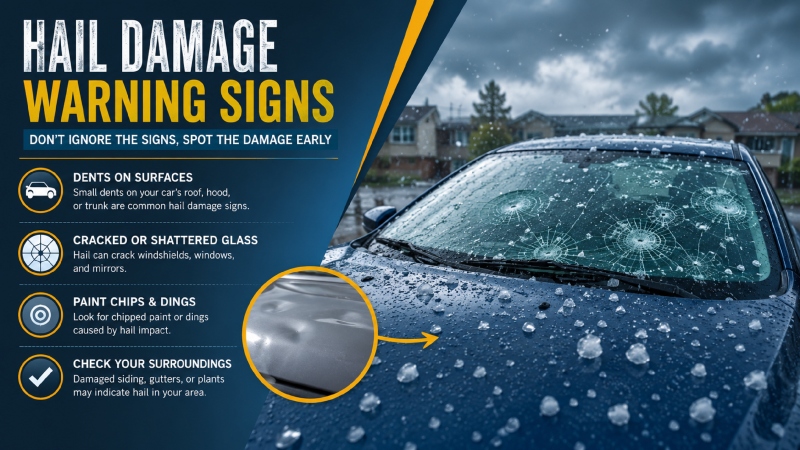
Hail Damage Warning Signs: Hailstorms can strike with little warning, leaving behind roof damage that isn’t always visible from the ground. While some hailstorms cause obvious problems, others create hidden damage that slowly weakens your roofing system over time. Knowing what to look for after a storm can help you identify problems early and avoid costly repairs.
Whether your home experiences small hail or larger hailstones, inspecting your roof after severe weather is one of the best ways to protect your investment.
How Hail Damages a Roof
When hailstones strike your roof, they can damage roofing materials in several ways.
Depending on the size of the hail and the intensity of the storm, impacts may cause:
- Cracked shingles
- Bruised shingles
- Granule loss
- Broken flashing
- Damaged roof vents
- Dented gutters
- Damaged skylights
Even if the damage appears minor, repeated hail impacts can shorten the life of your roof.
Why Asphalt Shingles Are Vulnerable
Asphalt shingles are designed to withstand normal weather conditions, but hail can weaken their protective surface.
The granules covering asphalt shingles help shield them from ultraviolet rays and weather exposure.
When hail knocks these granules loose, shingles become more susceptible to:
- Sun damage
- Moisture intrusion
- Cracking
- Premature aging
Over time, this can reduce the overall lifespan of the roofing system.
Common Warning Signs of Hail Damage
After a hailstorm, inspect your property from the ground for signs such as:
- Granules collecting in gutters
- Dented gutters
- Dented downspouts
- Damaged siding
- Broken window screens
- Roofing debris
- Fallen tree branches
These signs often indicate that your roof may have sustained hail damage as well.
Hidden Roof Damage
Not every hail-damaged roof shows obvious signs.
Professional inspections frequently identify:
- Soft impact bruises
- Broken shingle seals
- Damaged underlayment
- Cracked flashing
- Lifted shingles
- Moisture beneath roofing materials
Because much of this damage is difficult to see from the ground, professional inspections are highly recommended after significant hailstorms.
Check Other Areas Around Your Home
Hail rarely affects only the roof.
Inspect nearby components including:
- Gutters
- Fascia
- Soffits
- Garage doors
- Window trim
- Outdoor air conditioning units
- Deck railings
Damage in these areas often confirms the intensity of the storm.
Should You File an Insurance Claim?
If hail has damaged your roof, your homeowners insurance policy may provide coverage depending on your policy and the extent of the damage.
Before filing a claim:
- Photograph visible damage.
- Record the date of the storm.
- Schedule a professional inspection.
- Keep copies of repair estimates.
Having detailed documentation can help support your claim.
Why Prompt Repairs Matter
Small hail damage often worsens over time.
Damaged shingles may eventually develop:
- Water leaks
- Mold growth
- Wood rot
- Interior ceiling damage
- Insulation problems
Addressing damage quickly can prevent more expensive repairs later.
Can Hail Damage Lead to Roof Replacement?
In some cases, isolated repairs are enough to restore your roof.
However, widespread hail damage across multiple roof slopes may make replacement the more practical long-term solution.
Factors that influence this decision include:
- Roof age
- Extent of hail impacts
- Shingle condition
- Insurance coverage
- Manufacturer matching requirements
A professional roofing inspection helps determine the most appropriate course of action.
Understanding Your Roofing Options
Every hail-damaged roof is different. Some homeowners only need minor repairs, while others discover that extensive damage has affected the overall integrity of the roofing system.
If you’re reviewing your options after a severe hailstorm, read more about the process to better understand when replacing your roof may provide the greatest long-term protection and value.
Learning about the replacement process before making a decision helps homeowners feel more confident throughout the project.
Frequently Asked Questions
Can small hail damage a roof?
Yes. Even smaller hailstones can remove protective granules, weaken shingles, and contribute to premature roof aging over time.
How soon should I inspect my roof after a hailstorm?
Inspect your property from the ground as soon as it is safe, and arrange for a professional inspection if you suspect damage.
Will hail damage always cause leaks?
Not immediately. Some hail damage weakens roofing materials without creating an immediate leak, but problems may develop months or even years later.
Should I repair hail damage right away?
Yes. Prompt repairs help prevent water intrusion and additional deterioration caused by future storms.
Final Thoughts
Hail damage isn’t always easy to recognize, but ignoring it can lead to expensive repairs and shorten the lifespan of your roof. Regular inspections, proper documentation after storms, and timely repairs are the best ways to protect your home. By addressing hail damage early, homeowners can preserve the integrity of their roofing system and reduce the likelihood of future problems. Visit lwmfhotels. blog for more details.