
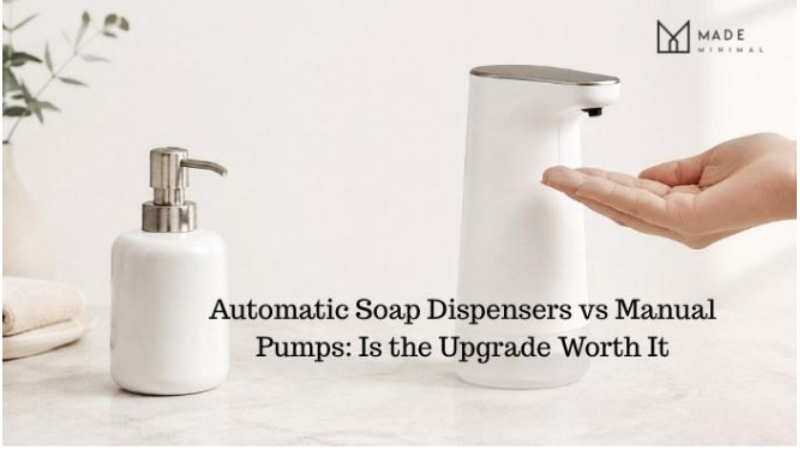
Automatic Soap Dispensers vs Manual Pumps: If you’ve ever fumbled with a soap pump while your hands were covered in raw chicken, you know how gross that gets. Automatic soap dispensers fix that problem entirely, and they’ve started showing up in more Australian kitchens and bathrooms because of it. The main question is whether the upgrade is worth the extra cost.
We tested both types of soap dispenser at Made Minimal, where we stock a range of bathroom accessories and kitchen products. After a few months of daily use, the differences in hygiene, durability, and everyday convenience were hard to ignore.
How an Automatic Soap Dispenser Actually Works
Is an Automatic Soap Dispenser Worth It? An automatic soap dispenser uses an infrared sensor to detect your hand and release a pre-measured dose of soap. You hold your hand under the spout, and the soap comes out on its own. It’s one of those things that sounds fancy but is dead simple.
Most models run on batteries or USB charging, so you won’t need any wiring to set one up. And because each dose is set, you end up using less soap per wash than you would with a manual pump.
Now that you know how the sensor works, the next question is why it helps with hygiene.
Cross-Contamination and Your Hand Soap Dispenser
Automatic Soap Dispensers vs Manual Pumps: Every time someone uses a manual soap pump, they leave bacteria on the nozzle, and the next person picks it right up. That’s cross-contamination in action, and it happens every day on your hand soap dispenser.
In fact, WHO hand hygiene guidelines recommend reducing contact with shared surfaces for exactly this reason. And thankfully, a touchless model helps remove that step.
You can see the difference in a few common scenarios.
- Shared Pump Heads: You wash your hands to get clean, but pressing down on a manual nozzle puts fresh germs right back on your fingers. A sensor-based dispenser breaks that cycle without you thinking about it.
- Kids and Hygiene: Young children touch everything before reaching for the soap, and most of them barely rinse (let’s be honest, kids treat hand washing like an optional activity). One less shared surface in the bathroom goes a long way.
- Flu Season Risk: If someone at home is unwell, a shared pump becomes a direct line for spreading germs. Switching to automatic during winter will reduce how quickly illness moves through the household.
For families dealing with young kids or seasonal bugs, going touchless is one of the easiest upgrades you can make.
Automatic Soap Dispensers in Kitchens and Eating Areas
The kitchen is where a touchless soap dispenser truly earns its place.
As we mentioned before, your soap pump collects bacteria every time you touch it with greasy or food-covered hands. You handle raw meat, crack eggs, rinse cooking utensils, and then press down on the same nozzle each time (not something you want anywhere near a chopping board).
An automatic soap dispenser at the kitchen sink takes that contact out of the equation. You wave a hand and go straight back to preparing food or loading dishes. Australian hand hygiene guidance also recommends clean hands between different foods during cooking. And a touchless setup near your eating areas makes that routine easy to stick with.
Once the kitchen is sorted, most people look at their bathroom next.
Wall-Mounted Soap Dispensers as Bathroom Accessories
Wall-mounted soap dispensers free up bench space and double as bathroom accessories that suit a modern or minimalist décor. Every bathroom we’ve put together looks better with fewer items crowding the vanity, and there are a few practical reasons to go wall-mounted too.
- Less Counter Clutter: A wall-mounted unit lifts the soap dispenser off the bench entirely, so you have more room around the tap and basin. Cleaning the counter gets faster too, since there’s nothing to move.
- Refillable and Durable: Instead of tossing out plastic bottles every few weeks, a refillable reservoir lets you top up with bulk soap. That cuts down on waste and saves money on replacements over the year.
- Wider Range of Finishes: These dispensers come in styles, colours, and materials that match your existing bathroom accessories, including matte black and brushed chrome. You choose based on what’s already in the room rather than settling for a generic plastic pump.
A wall-mounted soap dispenser sits flush against the wall, costs less to maintain over time, and gives your bathroom a cleaner, more intentional look.
Which Liquid Soaps Work With Each Soap Dispenser
To be honest, most people just grab whatever soap is on sale and hope for the best. But not every liquid soap works in every soap dispenser, and choosing the wrong one can clog the sensor or jam the pump.
Here’s how the main types compare.
| Soap Type | Automatic Dispenser | Manual Pump |
| Thin Liquid Soaps | Works well | Works well |
| Thick Cream Soaps | May clog sensor | Works well |
| Foaming Soaps | Works well | May need foaming pump |
Thick cream soaps are where the two types split.
Automatic sensors struggle with heavier formulas because the liquid doesn’t pour fast enough to clear the valve. Manual pumps handle those without issue, which is one area where the older design still has an edge.
Bottom Line: If you prefer thicker soaps and don’t want to switch brands, a manual pump might be the better long-term fit for your bathroom.
After you’ve sorted out which soap to use, the material of the dispenser is worth thinking about too.
Stainless Steel or Plastic for Hand Washing
When it comes to hand washing stations, stainless steel and plastic are your two main options. We had a plastic one in our own bathroom that started yellowing within six months (plastic and daily moisture are not a great combination). The unit next to it still looks new, and that’s after daily use by a full household.
High-quality stainless steel resists fingerprints, water spots, and rust without needing much upkeep. Plastic, however, costs less upfront, but you may need to replace it sooner and regularly clean the surfaces to prevent discolouration.
Ultimately, a durable stainless steel dispenser will save you both money and time over the years (especially for a busy household).
Wall Mounted Soap or Countertop Automatic Soap
The last thing to figure out is where your dispenser actually goes. If you’re renting, this one’s worth paying attention to.
A wall-mounted soap dispenser means drilling into tiles, patching holes when you leave, and getting your landlord’s approval first. A countertop automatic soap unit skips all of that, and it comes with you when you move.
Homeowners have more freedom here. Wall-mounted options suit a permanent setup and keep the look consistent with the rest of the bathroom. Countertop models are easier to swap between the kitchen and a guest room if you like to mix things up.
Either way, your lease and layout should guide the decision.
Should You Upgrade Your Hand Soap Dispenser?
Automatic Soap Dispensers vs Manual Pumps: If you cook often, have kids at home, or just want a cleaner sink area, an automatic soap dispenser is worth switching to. You’ll spend less on soap over time, refill less often, and avoid spreading germs through a shared pump.
Manual pumps still work well for smaller households or anyone who prefers a simple, low-cost setup (no pressure either way).
At Made Minimal, we carry both types of hand soap dispensers alongside our bathroom and kitchen accessories. Take a look at our soap dispenser range and pick the one that suits your space best.