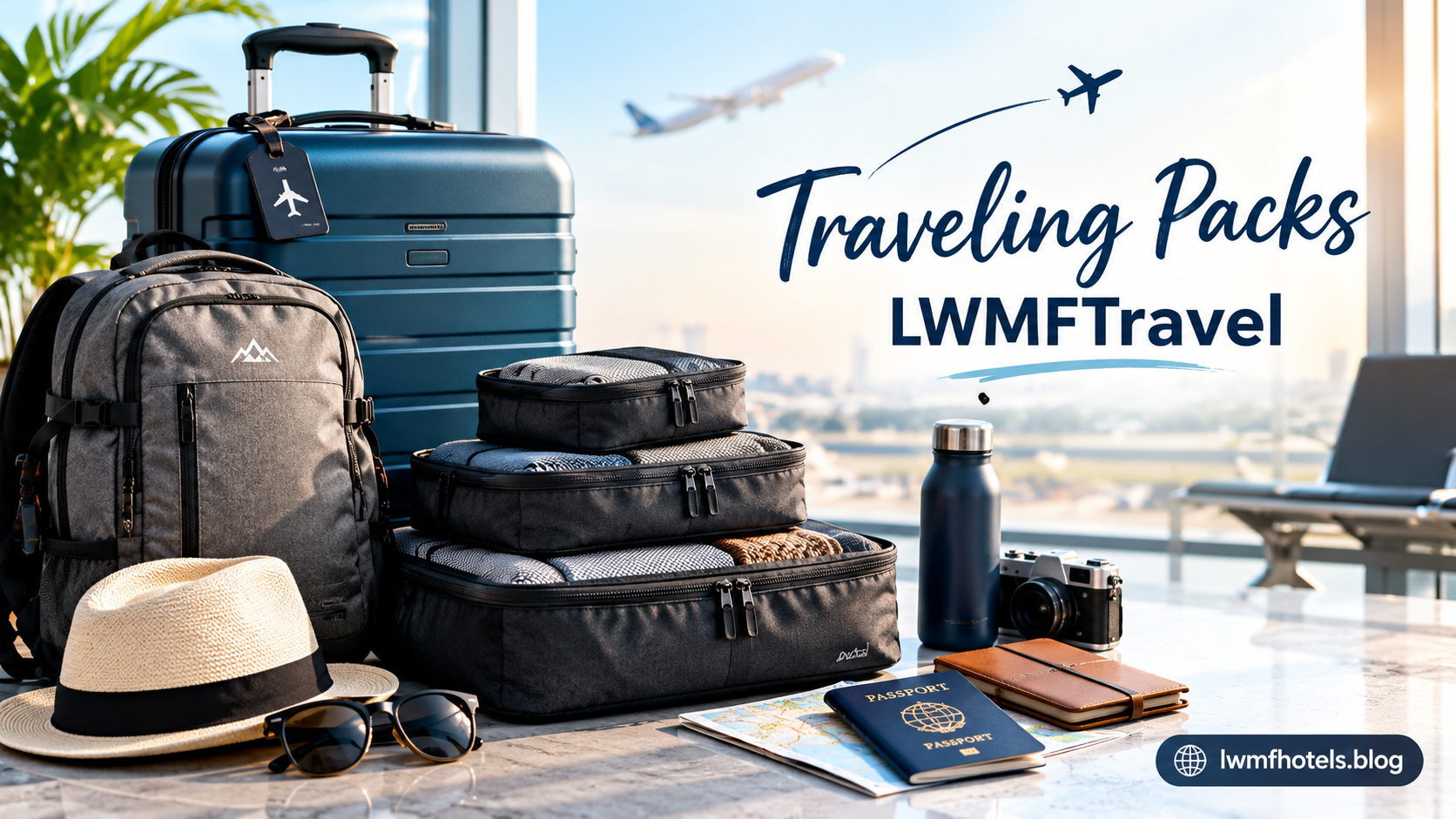
Most trips go wrong in the suitcase, not at the airport. You either drag along things you never touch, or you reach the hotel and realise the one item you actually needed stayed home. Traveling packs LWMFTravel tackles that exact problem: it treats packing as a list you build from your itinerary, not a pile of “just in case” items.
What Are Traveling Packs?
A traveling pack is the set of items you carry for one specific trip — clothes, toiletries, medication, documents, and whatever else your days away demand. It is not a single fixed list. A weekend city break and a two-week mountain trip share a few basics and almost nothing else.
The travel blog LWMFTravel covers this idea across several article categories, including traveling packs, excursion packs, sightseeing guides, meals-included packs, and general package guidance. Its packing articles open with a simple question: what does this trip actually require? Traveling packs LWMFTravel
Meals Included or Not: Why It Changes Your List
The biggest single factor in how much you pack is whether your package includes food. LWMFTravel splits its packages into two broad types — meals included and meals not included — and the packing advice shifts with each one lwmftravel.
If meals are covered, your pack gets lighter. You still bring clothes, shoes, and toiletries such as toothpaste and a brush, but you leave the kitchen behind.
If meals are not included, you have two choices. You can eat at hotels and restaurants, in which case your pack stays much the same. Or you can cook for yourself, which keeps both cost and nutrition under your control — and that means adding cooking utensils, washing supplies, and a small cylinder so you can prepare food wherever you stay lwmftravel.
What to Put in a Traveling Pack
The essentials
Every pack starts with the daily items you would reach for at home: soap, shampoo, toothpaste, a brush, clothes, and a spoon or two. Add your travel documents, chargers, a basic first-aid kit, and any prescription medicine.
Extras worth the space
- Packing cubes, which keep clothes sorted by person or category and make unpacking quick.
- A refillable water bottle and small snacks for delays
- A compact entertainment kit for children, such as a tablet, colouring book or puzzle
- Spare clothes for unexpected weather or spills
Why Bother Packing Carefully?
Because shops are not always nearby. If you are staying somewhere remote with no store within reach, “I’ll buy it there” stops being a plan. Packing well is cheaper than replacing forgotten items at airport prices, and far less stressful than hunting for a pharmacy in an unfamiliar town late at night.
Packing Tips That Actually Help
Write a master list first. Walk through each person’s clothing, toiletries, medication, and comfort items, then group them by type.
Let destinations guide your packing. Shorter journeys with young children mean less time managing bags and more time enjoying the place.
Balance activity and rest. One main activity a day, with downtime built in, keeps everyone from burning out halfway through.
Check the package details before you pack. Destination, number of days, and whether you are travelling domestically or abroad all shape what a package covers — and therefore what you still need to bring yourself.
Conclusion
Good packing is really good planning. Decide what kind of package you have, work out what your days will demand, and build the list from there. Traveling packs LWMFTravel makes that point simply: the items you carry should match the trip you booked, not the one you vaguely imagined. Start with the essentials, add only the extras your itinerary genuinely needs, and you will spend your holiday enjoying the place instead of searching for a toothbrush. Click here.