
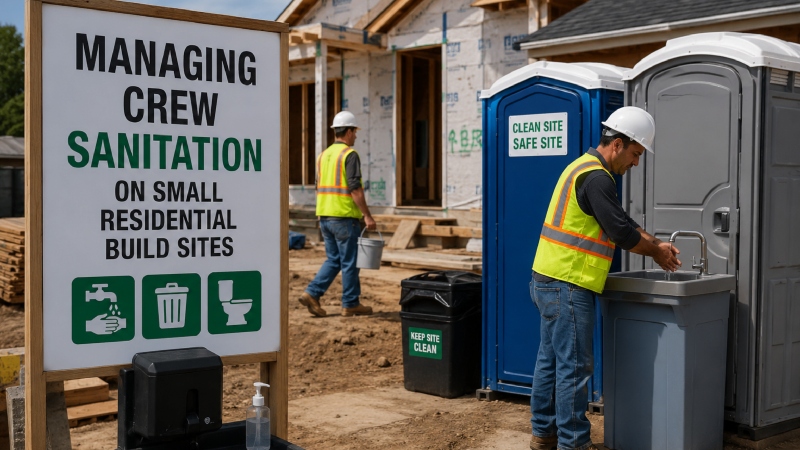
Managing Crew Sanitation on Small Residential Build Sites. Small residential build sites may not have the same scale as large commercial projects, but sanitation still matters. A new home build, addition, major remodel, detached garage project, or residential site improvement can keep crews on the property for weeks or months. Workers need practical restroom access, and construction managers need a sanitation setup that fits within limited space without interfering with the project.
Because residential sites are often tighter than commercial jobsites, portable restroom planning requires careful placement and scheduling. Driveways may be used for deliveries, equipment, dumpsters, lumber, concrete trucks, or homeowner access. Yards may be partially excavated, fenced, landscaped, or too soft for heavy use. A good sanitation plan supports the crew while keeping the property organized and professional.
Why Sanitation Matters on Smaller Sites
Managing Crew Sanitation on Small Residential Build Sites easy to underestimate sanitation needs on small residential projects. A crew may be smaller, but workers still need convenient access throughout the day. If restroom access is not provided or is placed too far from the work area, crews may lose time leaving the site, driving to nearby facilities, or interrupting the work schedule.
Sanitation also affects jobsite professionalism. Homeowners, neighbors, inspectors, and subcontractors all notice whether the site appears organized. A portable restroom that is properly placed and maintained helps the project feel more controlled.
Even on compact residential builds, crew sanitation should be planned before work begins.
Evaluating Crew Size and Project Duration
Construction managers should start by estimating how many workers will be on-site during each phase. A small framing crew may be present early in the project, followed by roofers, electricians, plumbers, HVAC workers, drywall crews, trim carpenters, painters, and other trades. Crew size may change from week to week.
Project duration matters too. A short repair may not require the same setup as a multi-month build or addition. Longer projects need a more dependable sanitation plan because crews will rely on the unit throughout multiple phases.
Planning around the busiest expected period helps avoid problems when more workers are present at the same time.
Choosing the Right Placement
Portable restroom placement is one of the most important decisions on a small residential site. The unit should be close enough for workers to use without wasting time, but it should not block driveways, sidewalks, material drops, garage access, or equipment paths. On many residential sites, there are only a few practical locations.
The best spot is usually firm, level, and accessible for service. It should not be placed where it will need to be moved constantly as work progresses. Managers should think about where lumber, drywall, roofing materials, concrete, and other deliveries will go before deciding.
Working with providers such as Rent Porta Johns can help construction managers coordinate portable restroom placement and service for residential build sites. A well-planned location keeps sanitation convenient without turning the unit into an obstacle.
Protecting Driveway and Street Access
Residential projects often rely heavily on the driveway and street frontage. These areas may be used by workers, delivery trucks, dumpsters, inspectors, concrete crews, and homeowners. If a portable restroom is placed without considering traffic flow, it can create daily access problems.
Construction managers should decide which parts of the driveway must stay open. If the homeowner still lives in the property during the project, they may need regular access to the garage or parking area. If the project is a new build, the driveway area may still be needed for equipment and material staging.
A restroom location should support the project without blocking the most useful access point.
Coordinating with Homeowners
On occupied residential projects, sanitation planning should include homeowner communication. Homeowners may have concerns about appearance, placement, odor, access, or how the unit will affect their daily routine. Addressing these concerns early can prevent frustration later.
Managers should explain where the portable restroom will be placed and why that location makes sense for the project. They should also clarify how the service will be handled and what areas the crew will use. This helps homeowners understand that the setup is intentional, not careless.
Good communication keeps sanitation from becoming an unnecessary source of tension.
Considering Neighbor Visibility
Small residential build sites are often close to neighboring homes. Portable restrooms may be visible from sidewalks, streets, porches, or nearby windows. While the unit must remain accessible, managers should also consider how it affects the surrounding property.
Whenever possible, placement should balance convenience with discretion. The restroom should not be hidden so well that crews avoid using it, but it should not be placed in a way that creates unnecessary neighborhood complaints. A neat, serviced unit in a practical location usually causes fewer concerns than one placed awkwardly or neglected.
Managing appearance matters more on residential sites because the work is happening in someone’s neighborhood.
Scheduling Regular Service
Portable restrooms need regular service to remain clean and usable. Even small crews can create problems if service is too infrequent, especially during hot weather, long workdays, or multi-trade phases. A unit that is not maintained can affect morale and make the site feel poorly managed.
Construction managers should schedule service based on project length, crew size, and expected use. If the project grows or more workers arrive than planned, the service schedule may need to change. Waiting until complaints occur is not a good strategy.
Regular service keeps the unit functional and helps maintain a more professional job site.
Adjusting for Project Phases
Residential build sites change constantly. Early site work may involve excavation, grading, foundation work, or framing. Later phases may involve roofing, windows, exterior finishes, drywall, flooring, trim, paint, and final details. A restroom location that works during framing may become inconvenient when landscaping, concrete, or exterior work begins.
Construction managers should review sanitation placement as the project moves forward. In some cases, the unit can remain in one location for the full build. In other cases, it may need to be relocated to keep access open or avoid interfering with the next phase.
A flexible sanitation plan helps the site stay organized as conditions change.
Keeping Units Away from Active Hazards
Portable restrooms should not be placed too close to active hazards. Excavations, overhead work, equipment paths, material cutting areas, and heavy loading zones can all make certain locations unsuitable. Workers should be able to access the unit without walking through unsafe or congested parts of the site.
Managers should also avoid placing the unit where falling materials, mud, runoff, or unstable ground could create problems. A stable location protects workers and helps service providers access the unit safely.
Convenience is important, but safety and stability should guide the final decision.
Supporting Subcontractor Access
Small residential projects often involve many subcontractors visiting for short periods. Electricians, plumbers, HVAC crews, roofers, concrete workers, insulation installers, drywall crews, and inspectors may all come and go. These workers need to know where sanitation is located without disrupting the main crew.
The restroom should be visible enough or easy enough to explain so that visitors can find it quickly. If it is tucked behind materials or hidden in a difficult spot, workers may waste time searching or choose less appropriate alternatives.
Simple, predictable access helps every crew use the site properly.
Planning for Weather Conditions
Weather can affect portable sanitation on residential sites. Rain can soften ground, create mud around the unit, or make certain access paths difficult. Wind can affect stability if the unit is placed in an exposed area. Snow or ice can make service access and worker access harder.
Construction managers should choose a location that holds up under normal weather changes. If conditions become difficult, the area around the unit may need basic maintenance so workers can reach it safely. This may include keeping the path clear, avoiding standing water, or adjusting placement if the ground becomes unusable.
Weather planning prevents sanitation from becoming a problem during longer residential builds.
Avoiding Common Sanitation Mistakes
One common mistake is waiting too long to arrange portable sanitation. If the unit arrives after crews have already started, workers may lose time, and the site may feel poorly prepared. Another mistake is placing the unit wherever there is open space without considering future deliveries or equipment needs.
Managers should also avoid letting the unit become difficult to service. A restroom that works for workers but cannot be reached by a service truck will create problems later. Placement should account for both daily use and ongoing maintenance.
The best sanitation plans are simple, practical, and built into the site layout from the beginning.
Managing crew sanitation on small residential build sites requires more planning than many people expect. Limited space, homeowner access, neighbor visibility, changing work phases, and multiple subcontractors all affect where portable restrooms should go and how they should be serviced. A good setup helps crews stay on-site, supports productivity, and keeps the project looking more professional.
By estimating crew size, choosing placement carefully, coordinating with homeowners, protecting access routes, scheduling service, and adjusting as the project changes, construction managers can keep sanitation from becoming a distraction. Even on smaller residential builds, a well-managed portable restroom plan supports smoother work and a cleaner, more organized jobsite from start to finish. Visit lwmfhotels. blog for more details.